Showing posts with label emerging technology. Show all posts

Saturday, July 24, 2010

The Top Ten Emerging Information Technology 2010

//-->
The Top Ten Emerging Information Technology 2010
Moving into a new decade, technology is only going to become more advanced, and with that, more services are needed to support new technology and its infrastructure. Businesses must use technology to stay in operation and be profitable, but even more; they must be using the newest technology that fits their needs so that they have a competitive advantage and remain profitable. This is especially important in a tough economy as Ann Bednarz highlights in her piece on technology industry trends; if you’re selling to the enterprise, ROI will be crucial to making a sale in 2010 as budgets become tighter and tighter.

When selling an enterprise technology solution, you must communicate how your solution is going to help the customer solve a problem or an opportunity. These technology trends were identified using current business drivers within Fortune 1000 companies and what they’re saying they need to fix or expand in 2010. These are areas will not only be important next year, but over the course of the next few years, and they will have a profound impact on how businesses operate and where they spend their IT budgets.
  • Cloud Computing
  • Green IT (data center greening, desktop power use)
  • Mobile Devices (laptops, smartphones)
  • Virtualization
  • Security Compliance (government regulations, data breaches)
  • IT Cost Optimization
  • Outsourcing and Insourcing (service providers)
  • Software as a Service (SaaS) (software via the internet)
  • E-Commerce
  • Grid Computing
Article Source:
http://EzineArticles.com/?expert=Chris_D_Pickering

Tuesday, June 15, 2010

Real-Time Search

//-->
Real-Time Search
Social networking is changing the way we seek information.

By Nicholas Carr

 How do you parse the tweet? Five years ago, that question would be nonsense. Today, perfectly reasonable, and that's in front of Amit Singhal's minds. Singhal Google search led to insert new data into search results in real time by tracking and ranking updates online content - especially the thousands of messages which of course through the social network every second.

real-time search is a response to fundamental changes in how people use the Web. People used to visit the page, click on the link, and visit other pages. Now they spend much time monitoring of data streams - tweets, status update, headlines - from services like Facebook and Twitter, and also from blogs and news outlets.

Brief info-nuggets are the new currency the Web, and sort through them for useful information is a challenge for search engines. Its the most frightening aspect, according to Singhal, does not collect data. Facebook and Twitter are happy to sell access to their data feed - or "fire hose," which they call - directly to the search service provider, the information that flows directly into Google's computer.

What's really hard about the real-time search is to find out the meaning and value of quick bits of information. The challenge goes beyond spam filtering, though it is an important part of it. People who are looking for real-time data to the same quality, authority, and relevance of what they expect when they engage in traditional Web search. Nobody wants to drink directly from a fire hose.

Google dominates traditional search carefully tracking signal and links to other pages in value as they accumulate over time. But the search for real-time, this does not work. Social-networking message can lose their value within minutes after the written. Google has to measure their value in seconds, or even microseconds.

Source:
http://www.technologyreview.com/computing/25079/

Thursday, June 3, 2010

Smartbooks

//-->
Smartbooks
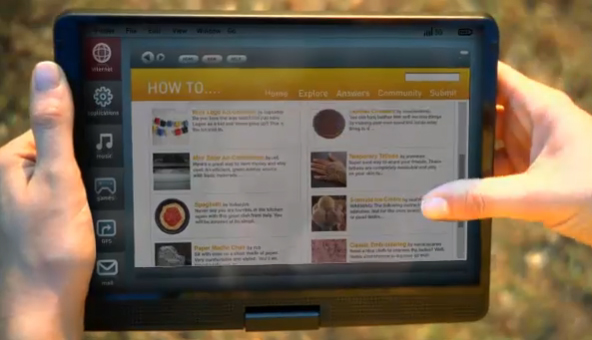
Smartbooks, the future of mobile computing?

Since the launch of the first lines of netbooks, I’ve had some concerns that they weren’t truly beneficial for mobile workers. The low battery life, lack of optical drives on some models, limited resources for programs, and their small form factor are not really conducive to mobile productivity.

SmartbooksSmartbooks


Smartbooks just may change that perception. The target market seems to be those who need a small form factor device that can allow the user to do more than read e-mail and browse the Internet. These will be the newest twist on the netbook, mini-notebook, sub-compact design but will feature the ARM chip as opposed to Intel’s Atom chip.

SmartbooksSmartbooks


What does that mean for mobile workers? The ARM chip will provide for longer battery life (eight hours is a number being tossed around). The Smartbooks will also run on Linux instead of Windows, and is that really a bad thing?

While it is stated that the ARM chips results in lower computing power compared to the Intel Atom, software companies and developers appear to be ready to start creating applications that will take advantage of the ARM chip and still provide mobile workers with the ability to use multimedia programs.

The Smartbook name follows on the path of Smartphones which evolved from basic cell phones to mobile devices that offer the user more and hopefully better ways to be productive. We may even see Smartbooks that have removable displays to be used as a variation of an e-reader. These variations would use the Tegra chip which is another ARM product.

So no matter the name you choose to call this new mobile device you can be sure that it will change the way you can work and how well you work while traveling. It will be interesting to follow the developments and see which companies chose to get involved with making these a more robust machine.

Source: The New York Times – Bits